
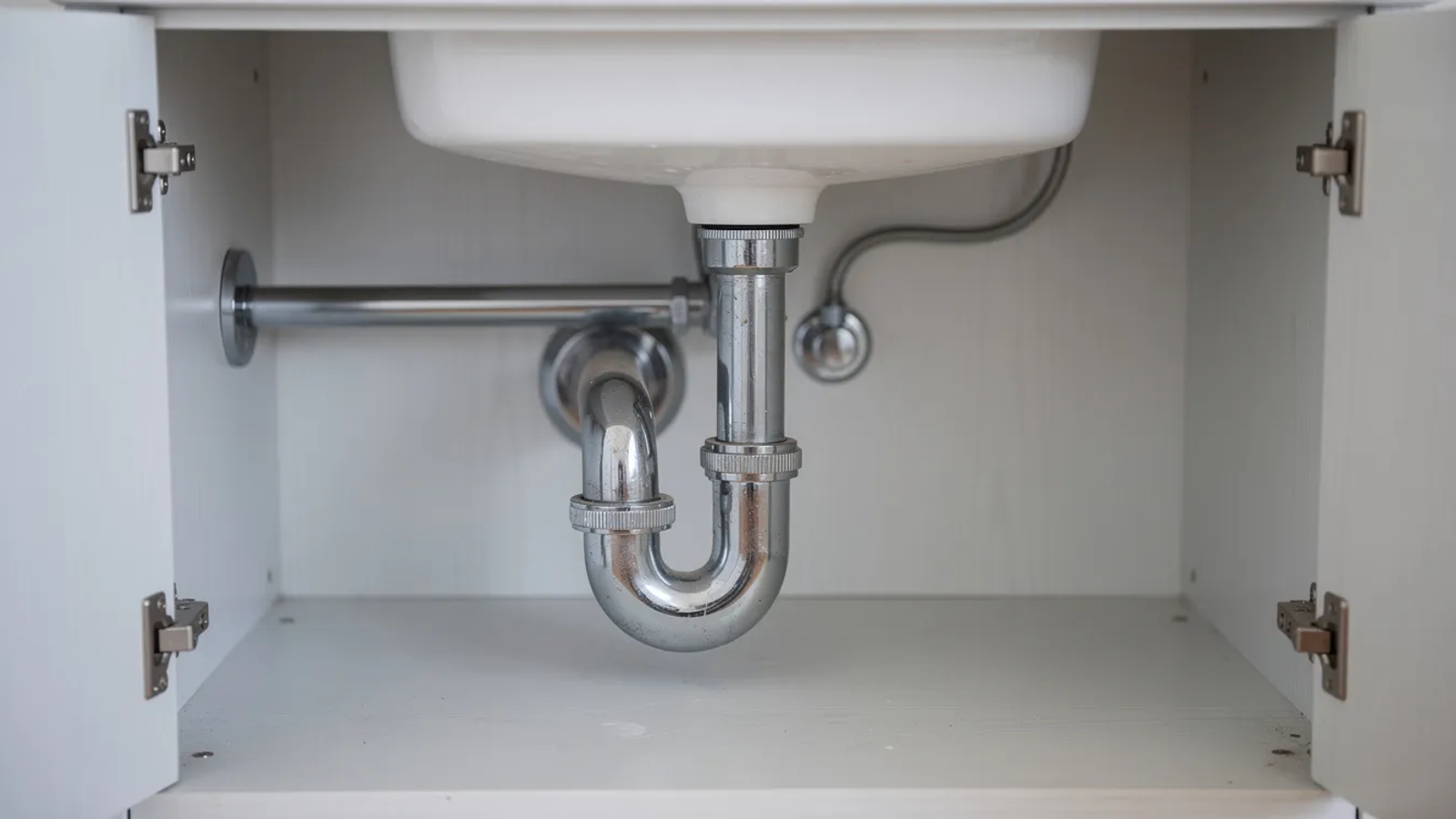
The fundamental difference between a P-trap and S-trap comes down to drainage direction and venting capability. A P-trap connects horizontally to a wall drain with proper venting, while an S-trap drops vertically into a floor drain without adequate ventilation. For homeowners in Utah considering plumbing upgrades or dealing with older fixtures, these differences determine code compliance, long-term reliability, and whether harmful sewer gases stay outside living spaces. Modern plumbing systems overwhelmingly use P-traps because of their venting and durability.
Below is a practical comparison of P-trap vs. S-trap configurations to help you make the right choice for your plumbing system.
P-Trap vs. S-Trap: Key Differences Overview
Both trap styles serve the same primary purpose: maintaining a water seal that prevents sewer gases from entering your home. However, their design and functionality differ significantly.
- A P-trap consists of a curved pipe forming a U-shape with a horizontal pipe extending to a wall outlet, allowing connection to a vent stack.
- An S-trap features an S-shaped bend with a vertical design that drops directly into a floor outlet without proper venting.
- S-traps are older designs and are largely prohibited by modern building codes.
- P-traps resemble a sideways “P,” while S-traps follow a vertical “S” shape.
- P-traps comply with modern plumbing codes, while S-traps are outdated or banned in new construction because of venting problems.
- Modern plumbing codes across Utah favor P-traps because they maintain a reliable water barrier.
- The right configuration depends on existing infrastructure, local codes, and whether the layout accommodates wall drainage.
The P-trap’s horizontal arm is the critical functional difference: it connects to vent piping that equalizes air pressure and prevents siphoning.
Installation and Connection Methods
How each trap connects to the home’s drainage system explains why professionals consistently recommend P-traps.
P-Trap Installation Requirements
- Connects horizontally through a wall to the existing drain line.
- Required by code for sinks, showers, and tubs in new construction and remodeling.
- Usually requires a vent stack or air admittance valve (AAV) for proper venting.
- The horizontal pipe should maintain about a ¼-inch slope per foot toward the drain.
- This is the standard approach for construction and renovations throughout Sandy, Salt Lake City, and surrounding areas.
The trap arm—the horizontal section between the trap and wall drain—must meet length requirements, typically four to six feet maximum depending on pipe diameter. This keeps water moving without creating siphon conditions.
S-Trap Installation Process
- Connects a fixture vertically to a floor drain outlet.
- Appears simpler when only floor drainage exists.
- Common in older homes or temporary setups without practical wall access or venting.
- Has no vent connection, which is the configuration’s fundamental problem.
Converting an S-trap to a P-trap generally requires rerouting the drain from the floor to the wall and installing a vent or AAV. Many older homes in American Fork and Lehi still have S-traps beneath bathroom sinks; although they may function, they create ongoing reliability concerns.
Code Compliance and Legal Requirements
Plumbing codes protect health and safety. Understanding each trap’s legal standing helps prevent expensive corrections.
P-Trap Code Standards
- Complies with the International Plumbing Code and Uniform Plumbing Code.
- Required for new installations and major renovations throughout Utah.
- Passes inspection when paired with proper venting.
- Reliably blocks sewer gases from entering indoor spaces.
Permit inspections in Salt Lake City and throughout Utah expect P-trap configurations with verified venting.
S-Trap Code Limitations
- Utah plumbing code prohibits S-traps in new installations.
- S-traps fail inspection because of siphoning risk and inadequate venting.
- Existing S-traps may remain until renovation triggers compliance requirements.
- A code-compliant P-trap conversion is often required for permit approval.
- Noncompliant traps can create concerns during home sales and inspections.
An existing S-trap does not always demand immediate replacement, but significant remodeling generally triggers mandatory conversion.
Water Seal Reliability and Performance
The water seal is the barrier against harmful gases, so its reliability directly affects comfort and safety.
P-Trap Water Seal Effectiveness
- The vent equalizes pressure and prevents vacuum conditions that break the seal.
- Water remains in the trap even after heavy drainage from fixtures above.
- Performance remains reliable in infrequently used guest bathrooms and laundry rooms.
- The system is largely self-maintaining under normal conditions.
As water flows through the drain, replacement air enters through the vent stack, preventing suction from pulling water out of the trap.
S-Trap Water Seal Challenges
- Rapid vertical flow creates a vacuum that can siphon the water barrier dry.
- A dry trap allows foul odors and sewer gases into living spaces.
- The seal needs more frequent attention.
- Seasonal or seldom-used fixtures are especially vulnerable.
Random unpleasant odors near an S-trap commonly indicate that siphoning has left the trap dry.
Maintenance Requirements and Accessibility
P-Trap Maintenance Benefits
- Slip joints make removal and debris clearing straightforward.
- Standard replacement parts are widely available.
- Most routine maintenance is DIY-friendly.
- Reliable venting reduces how often the trap needs attention.
- Accessible components make slow drains easier to address.
S-Trap Maintenance Considerations
- Proper repairs more often require a professional plumber.
- The water seal needs more frequent verification.
- Replacement parts are increasingly difficult to find.
- Recurring siphoning can increase long-term costs.
- The vertical configuration can make deeper clogs harder to clear.
Cost Factors and Installation Considerations
Basic PVC P-traps generally cost $8–$20, while chrome or brass finishes cost more. S-trap parts may be inexpensive but are becoming harder to source because of code restrictions.
A properly vented P-trap may require additional labor to route pipes through walls or connect to a vent stack, but that investment improves reliability. Retrofitting an S-trap can cost a few hundred dollars for a simple conversion or several thousand when an older Utah home requires wall or floor access.
Long-term value strongly favors P-traps. Noncompliant plumbing can affect resale, fail inspection, and expose occupants to sewer gases. Quick Quality Plumbing can assess the most cost-effective approach for a specific Utah home.
When to Choose a P-Trap vs. S-Trap
Toilets and fixtures may use floor-outlet or wall-outlet arrangements, but modern bathroom designs generally favor the vented, wall-connected P-trap approach for easier maintenance and dependable performance.
Choose a P-Trap When
- Building new construction or completing a major renovation.
- Wall access exists for proper venting.
- Code compliance and inspection approval are required.
- Long-term reliability and low maintenance are priorities.
- You expect to sell the home in the foreseeable future.
Consider an S-Trap Only When
- A highly specific retrofit has floor-only drainage and the solution is temporary.
- Historic-preservation requirements limit modifications.
- A licensed professional confirms there is no viable P-trap alternative.
Verify local code and inspection requirements before choosing a trap. Quick Quality Plumbing can clarify what an existing system needs for compliance and reliable performance.
Frequently Asked Questions
How can I identify whether my home has an S-trap or P-trap?
Look under the sink. A curved pipe that exits horizontally into the wall is a P-trap. A pipe that curves down, back up, and then straight into the floor is an S-trap. A visible vent connection near the wall also points to a P-trap configuration.
What does it cost to convert an S-trap to a code-compliant P-trap?
Costs depend on access and layout. A simple conversion where wall access exists may run $200–$500 including labor and materials. Complex retrofits that require opening walls or floors can range from $800–$2,500 or more.
Will inspectors require me to replace my existing S-trap?
Existing S-traps can often remain until permit-required work occurs. Bathroom remodels, fixture replacements, and additions commonly trigger compliance rules, and Utah prohibits S-traps in new installations.
Can I convert an S-trap to a P-trap myself?
The work requires correct venting, slope, and code compliance. Installing an AAV or connecting to a vent stack involves more than basic pipe fitting, so homeowners in American Fork, Sandy, and elsewhere in Utah should consult a licensed plumber.